01
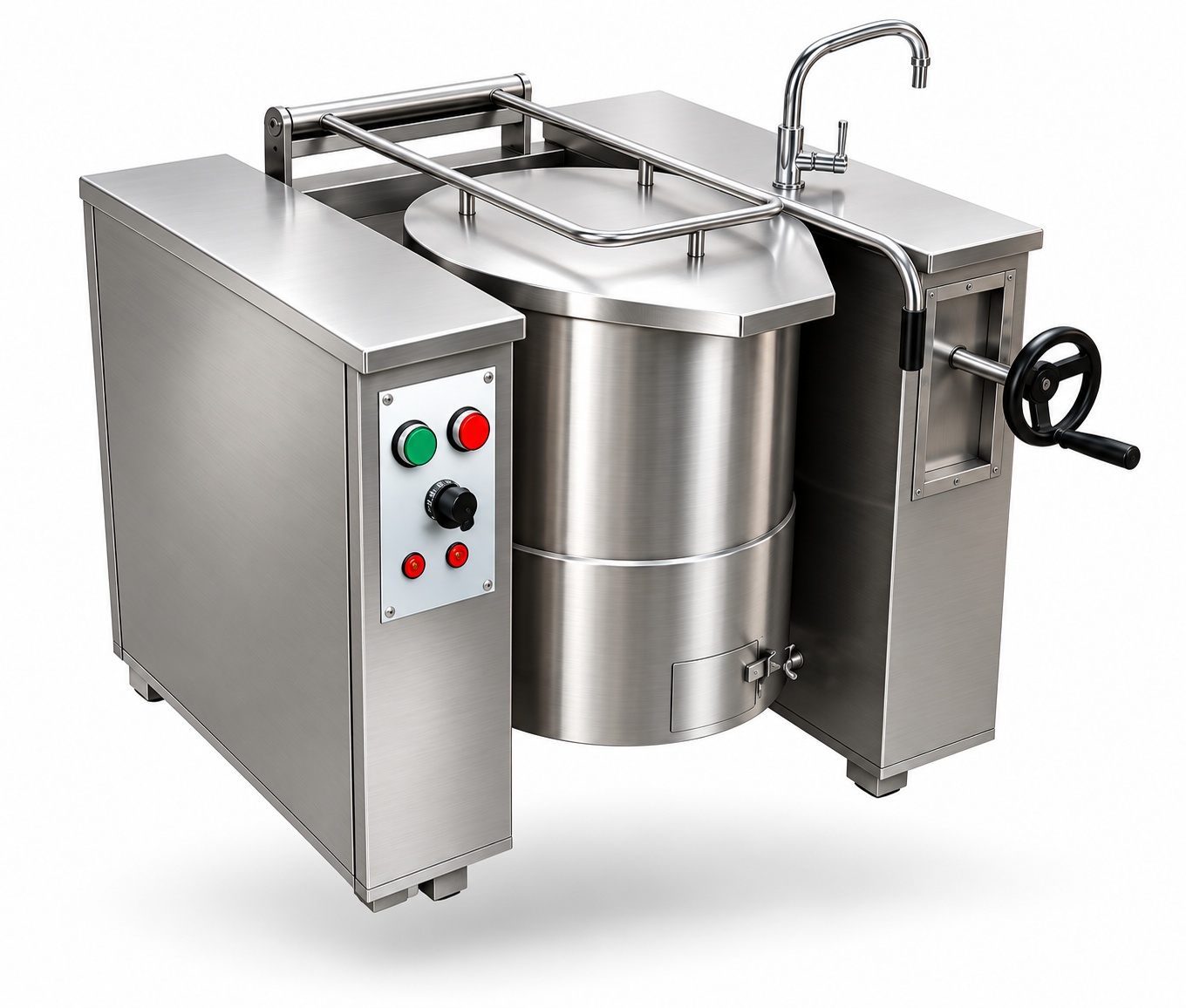
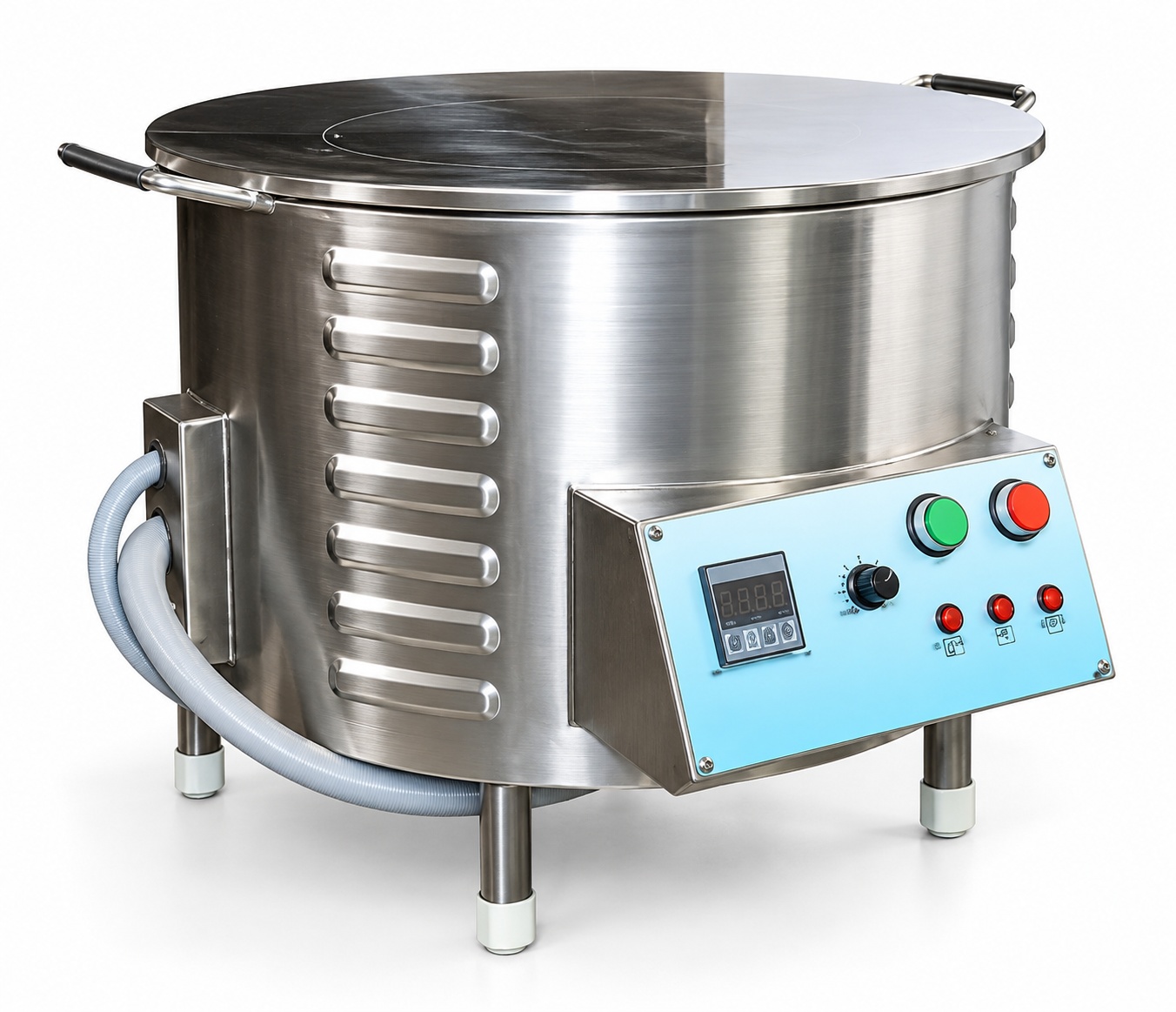
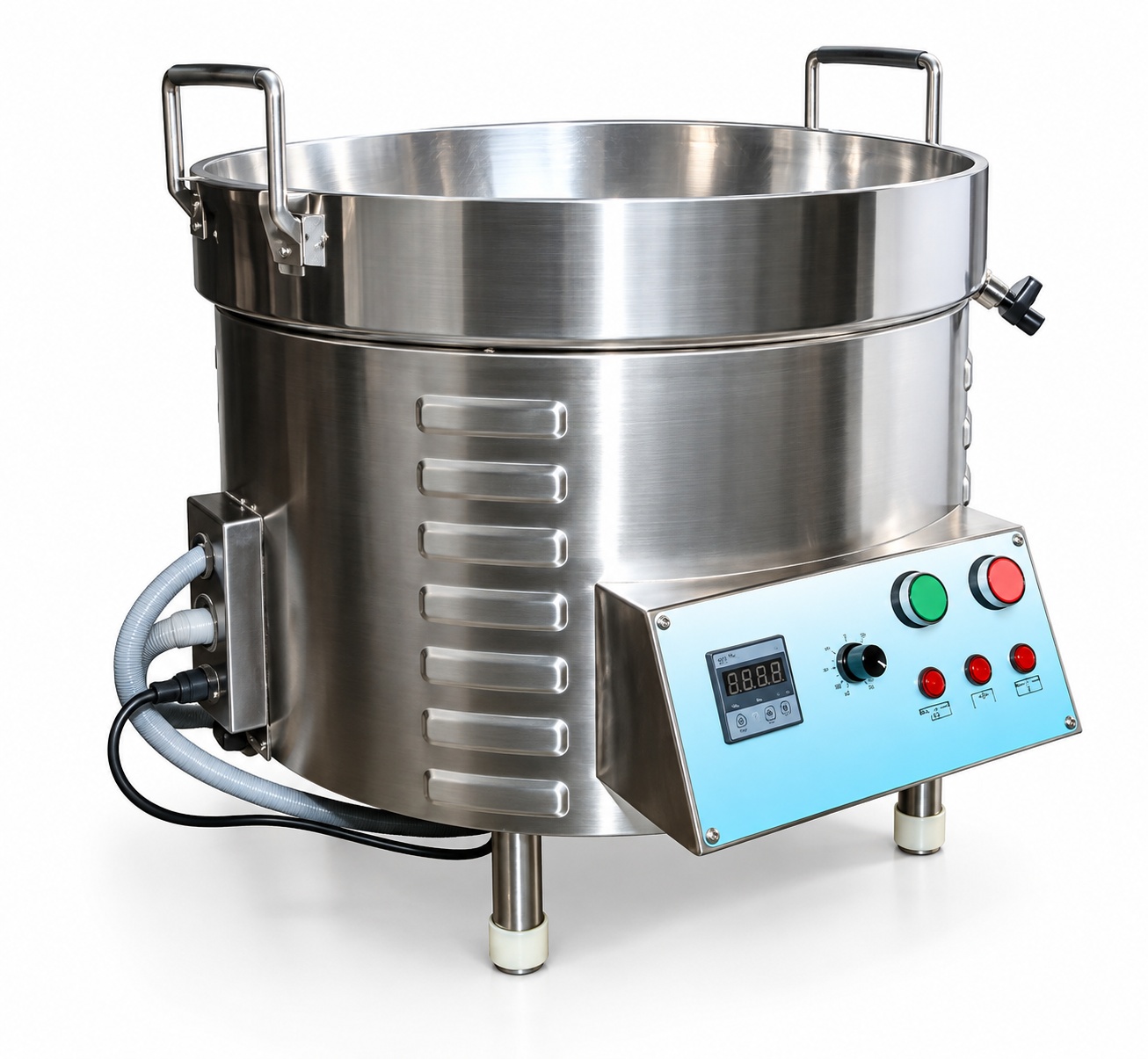
Boiling Pan
Used for bulk liquids such as dal, sambar, stock, milk and tea, heated directly from the vessel wall.
Commercial induction equipment, designed around your menu, your production volumes and the electrical capacity you already have.
Fifteen pieces of commercial induction equipment. Open any of them for the full details, or ask for a demonstration on your own menu.
Used for bulk liquids such as dal, sambar, stock, milk and tea, heated directly from the vessel wall.
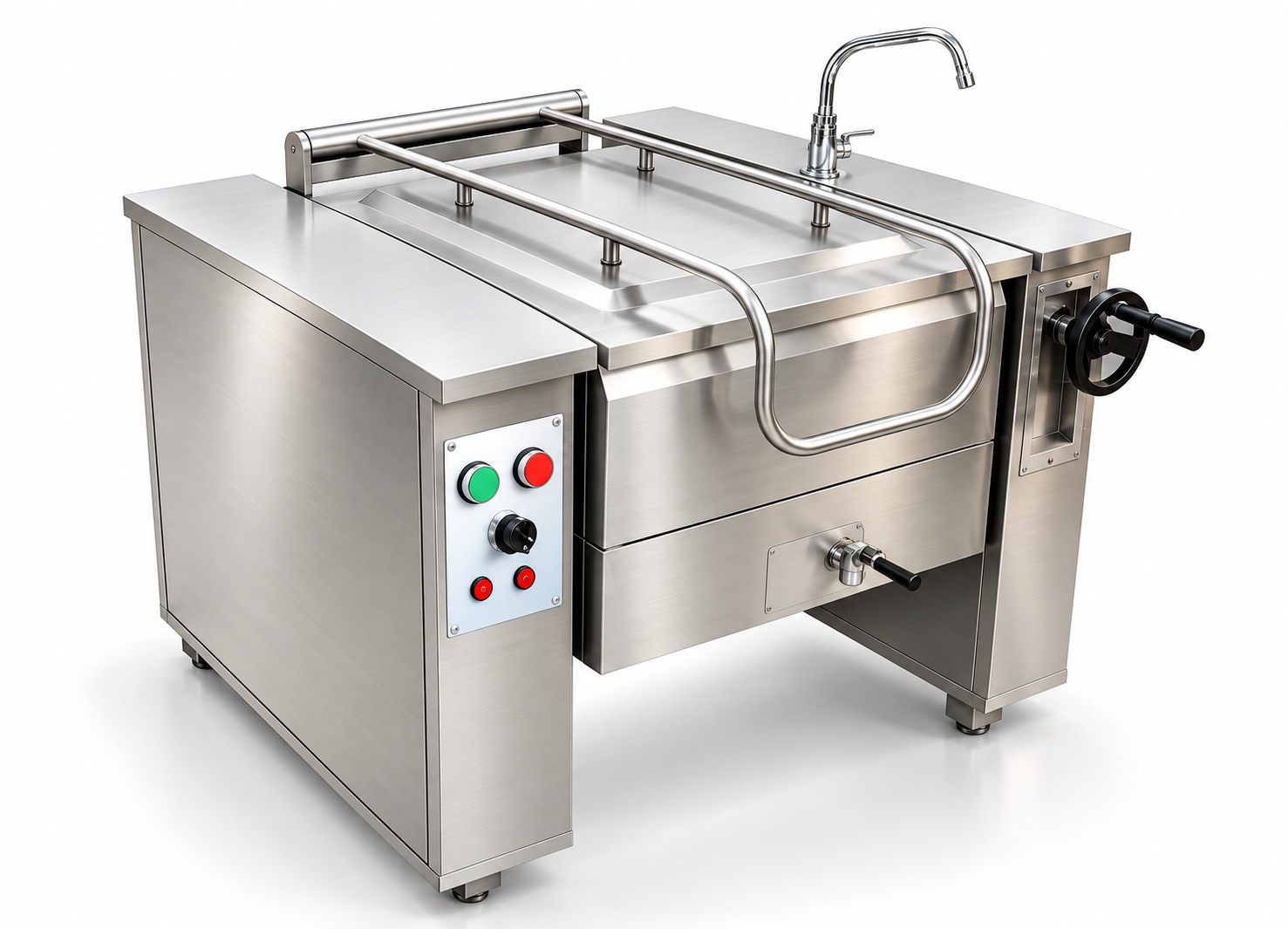
One flat surface for sautéing, gravies, bulk frying and braising, with a tilting body for pouring out the batch.
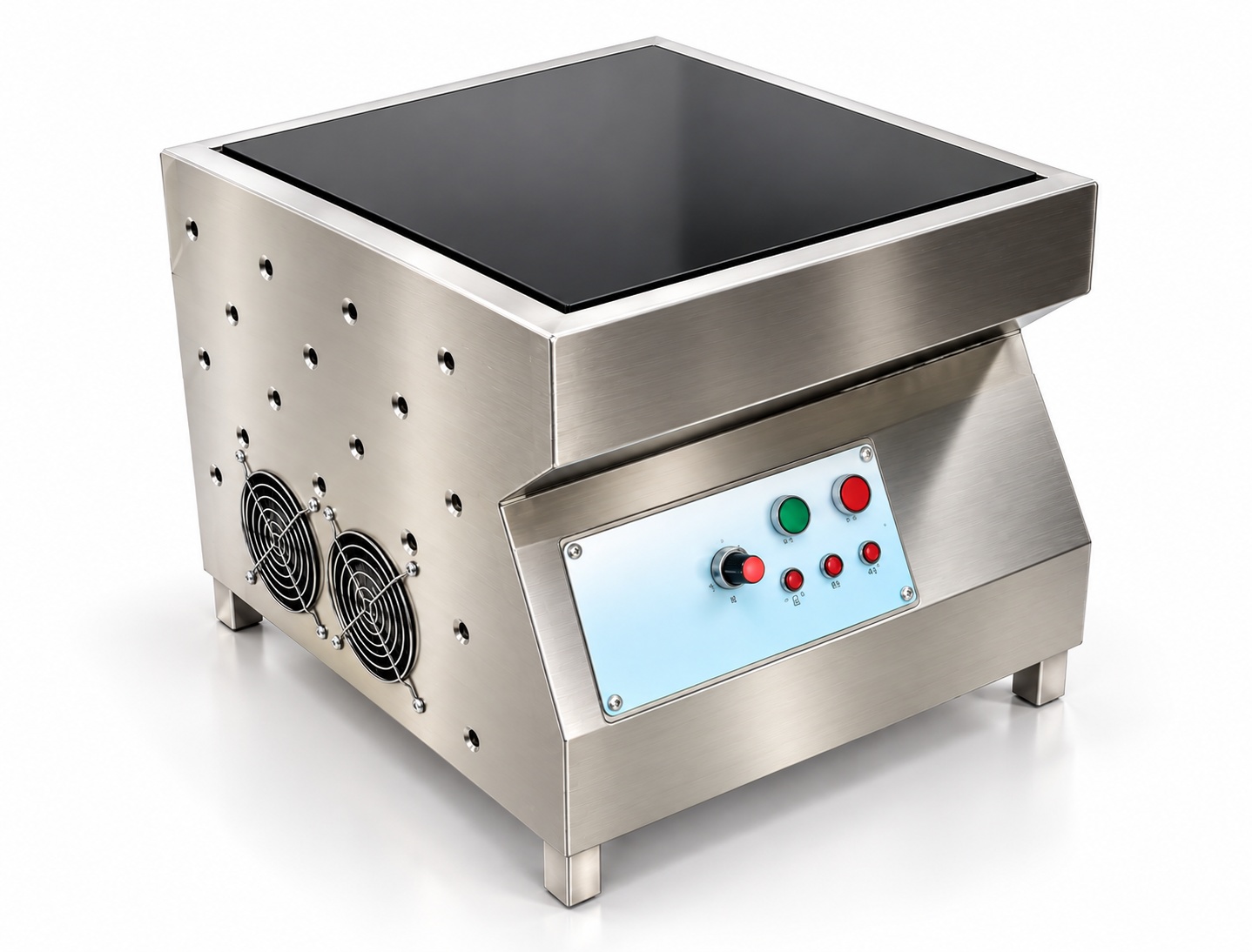
The general-purpose work surface, available with one, two or four independent zones on a single frame.
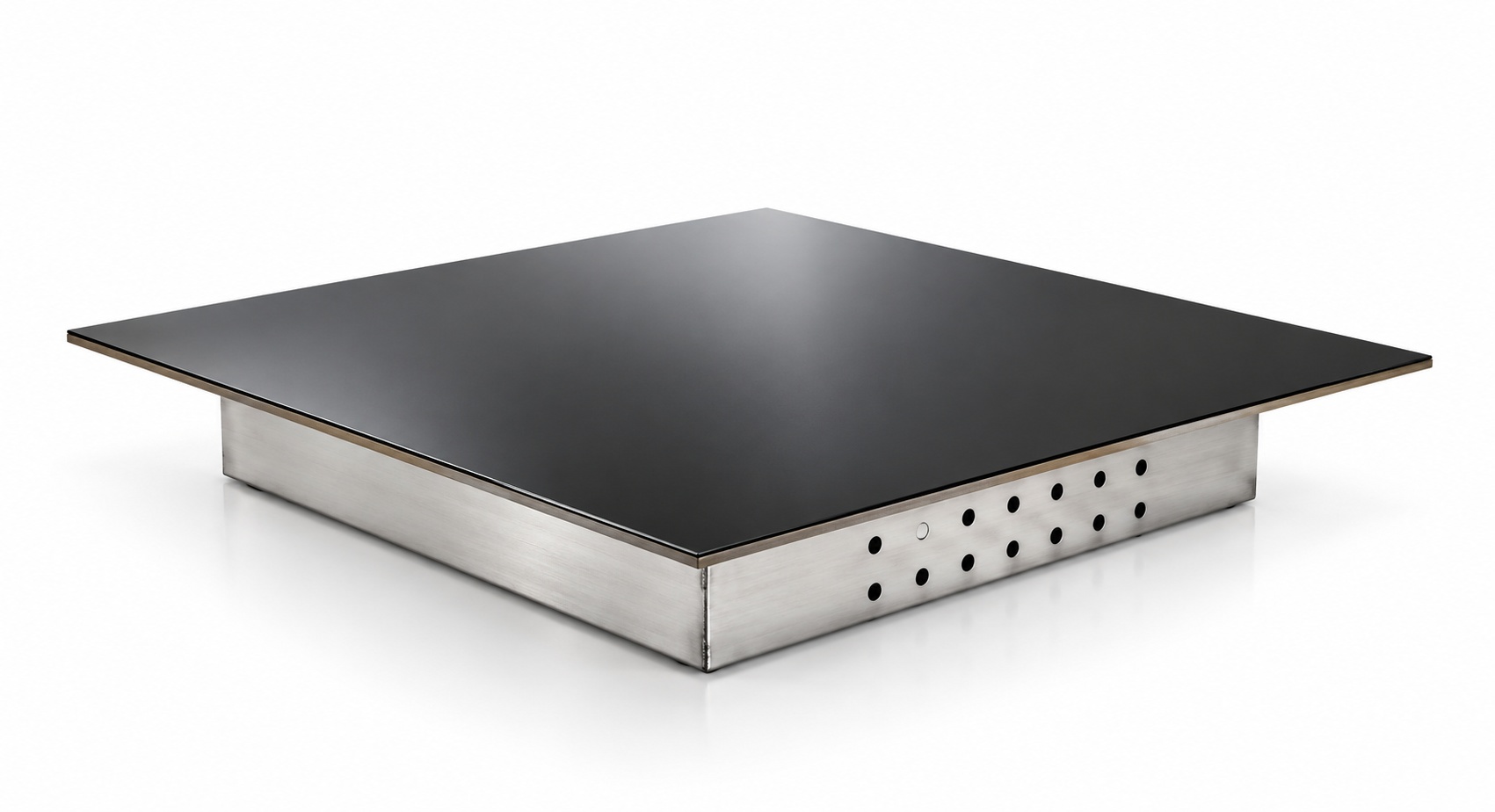
Designed for holding rather than cooking, so food stays at service temperature from the first guest to the last.
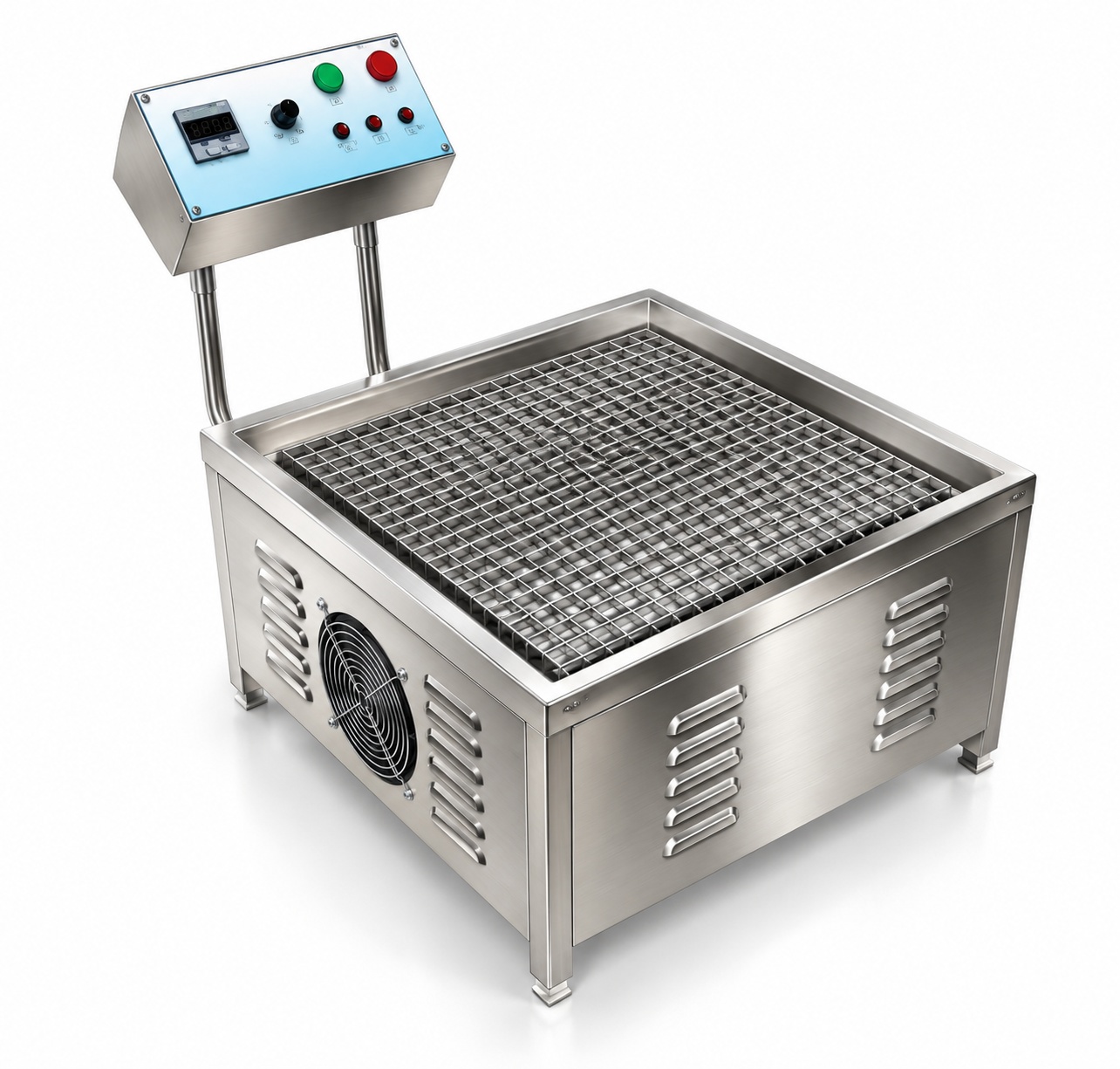
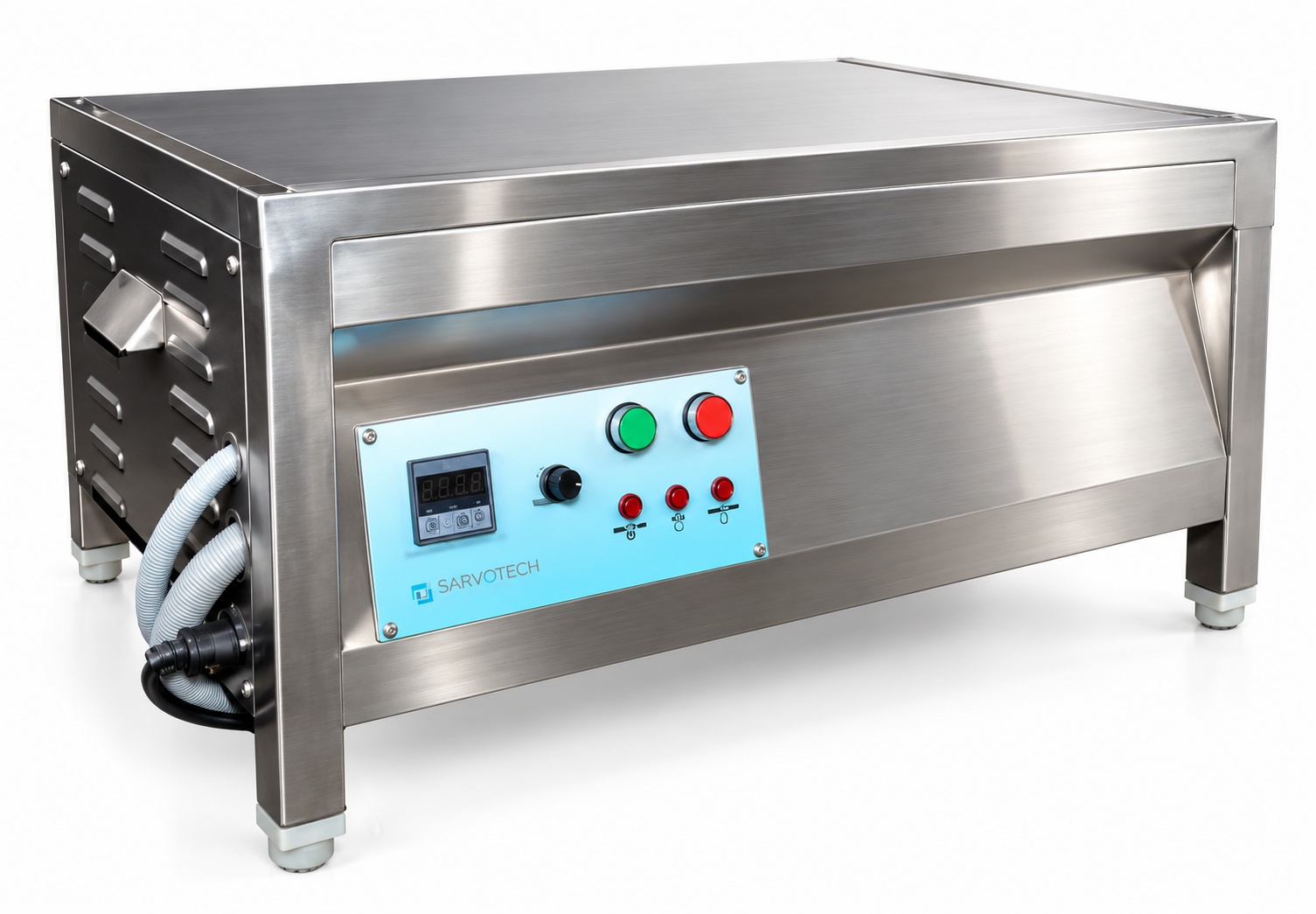
A flat plate held at one temperature from edge to edge, so the last dosa looks the same as the first.
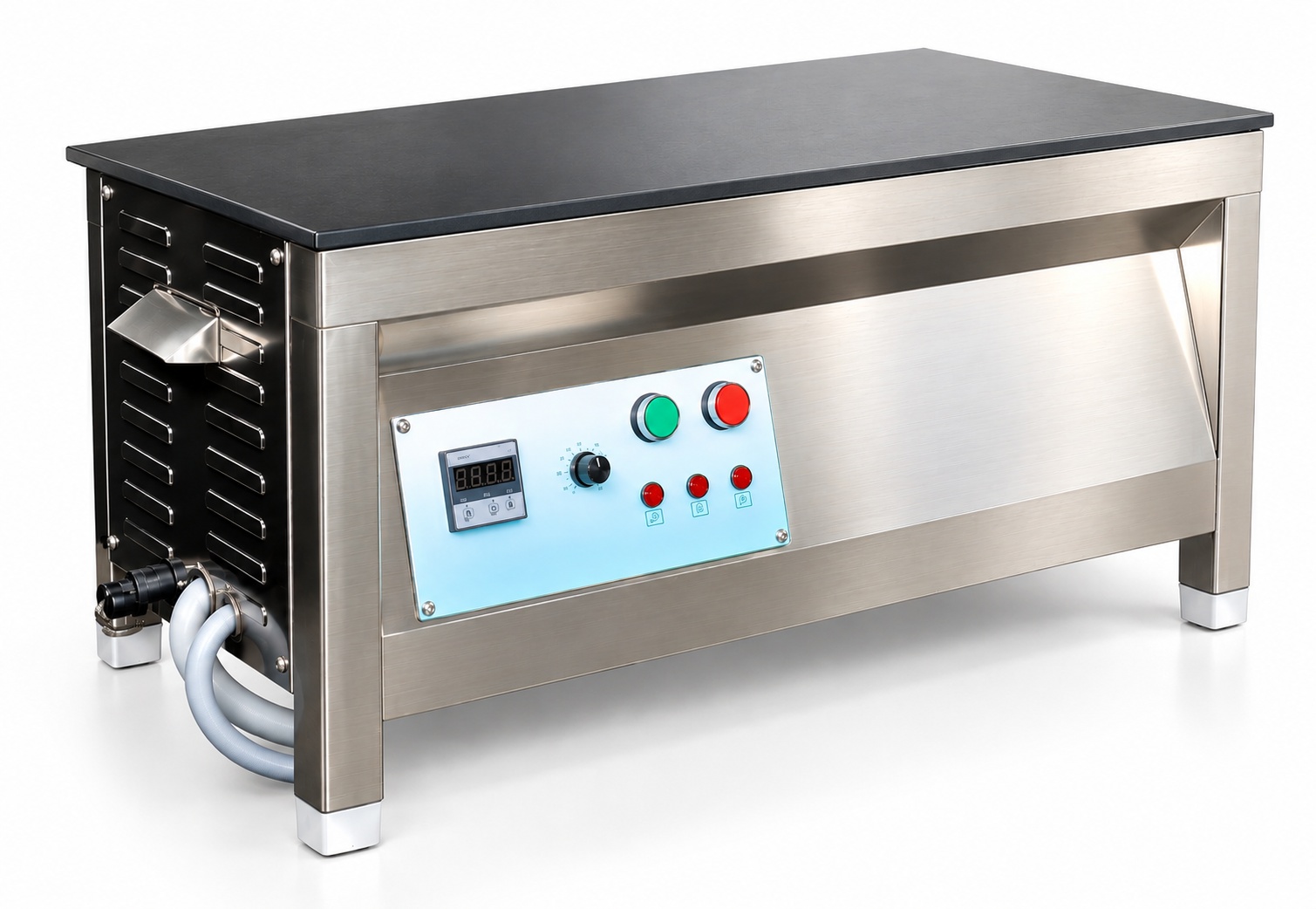
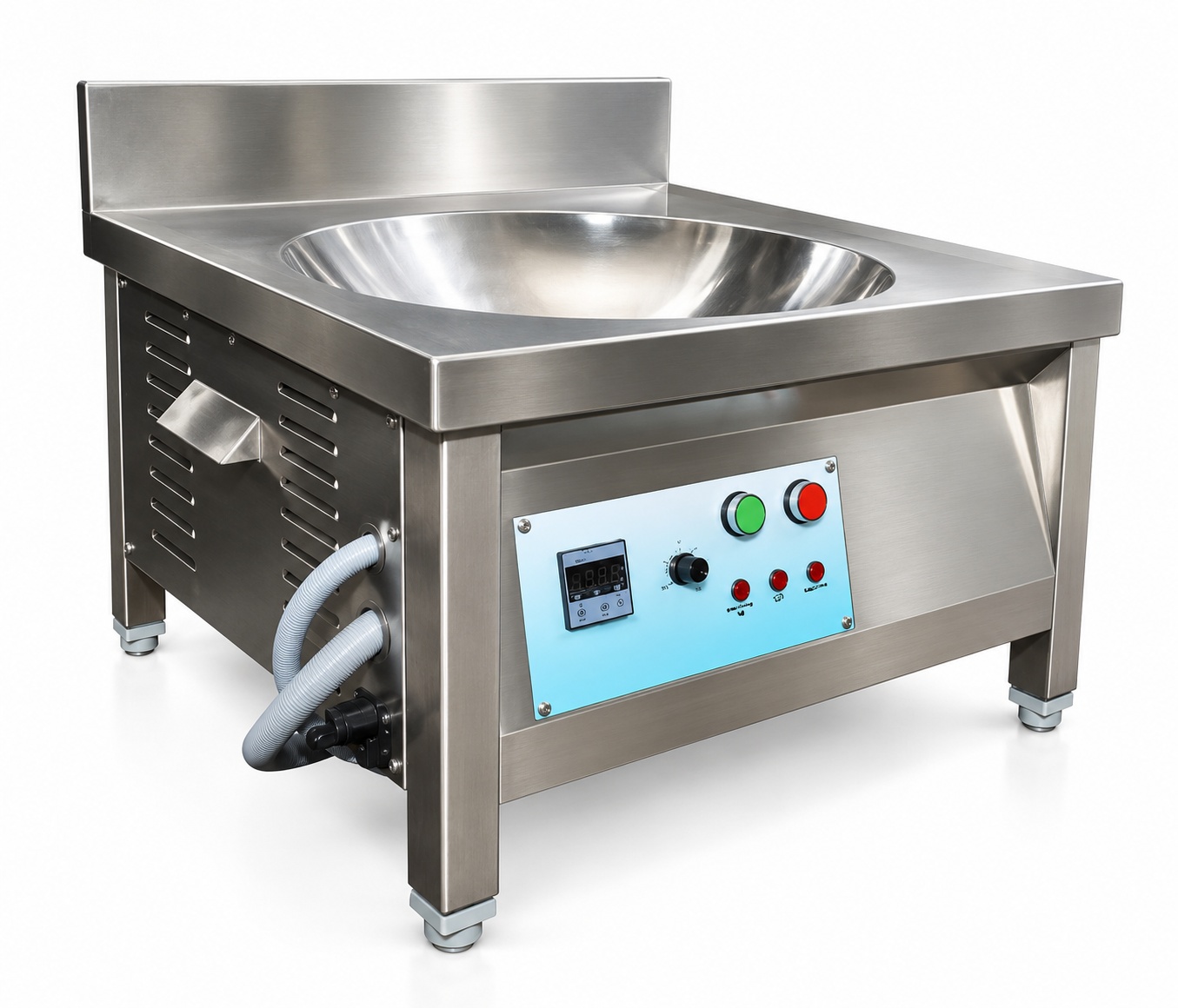
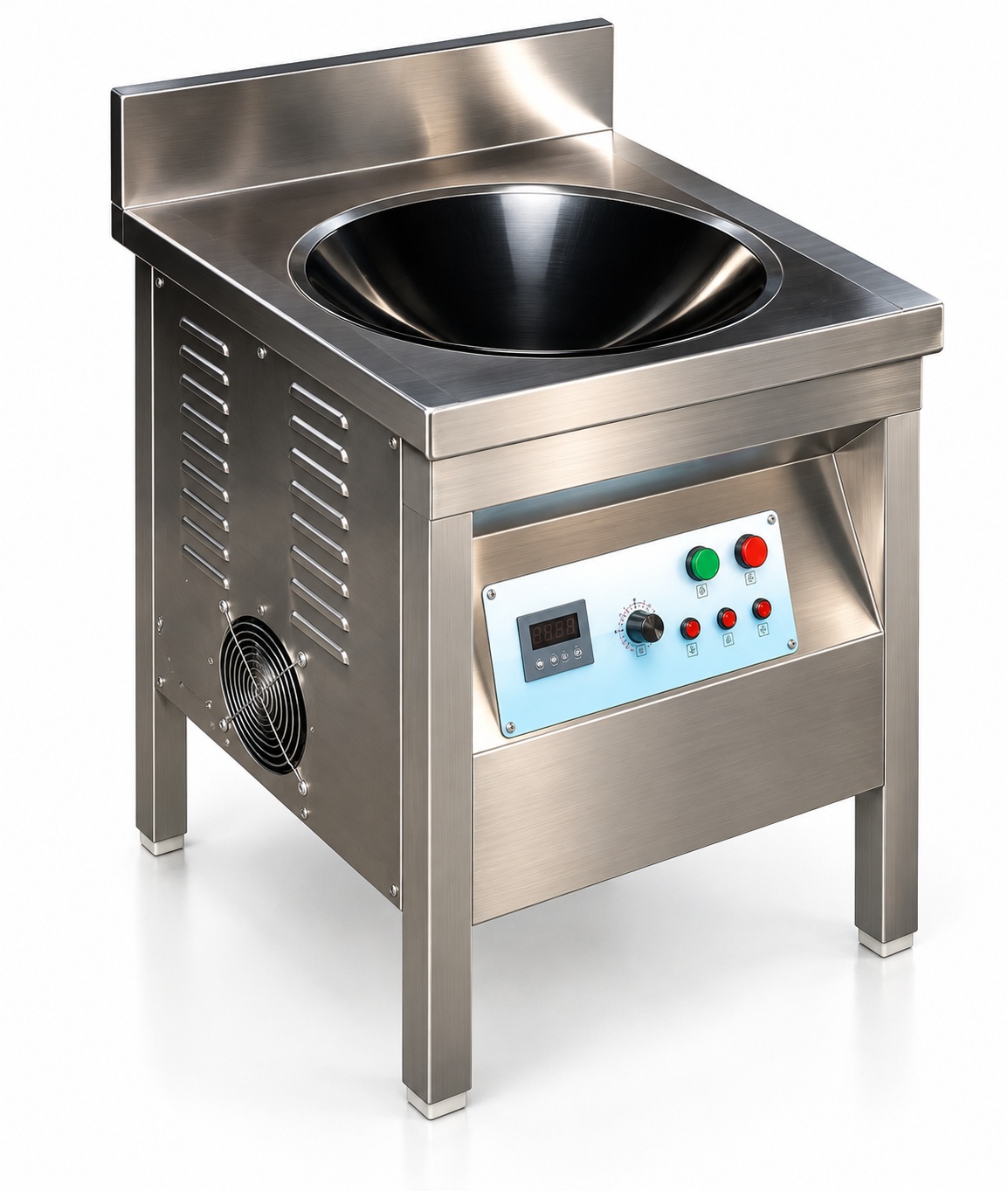
A deep hemispherical vessel for bhuna, halwa, deep frying and anything that needs a wall to work against.
A plate for shallow frying and finishing that holds exactly the temperature you set through the whole shift.
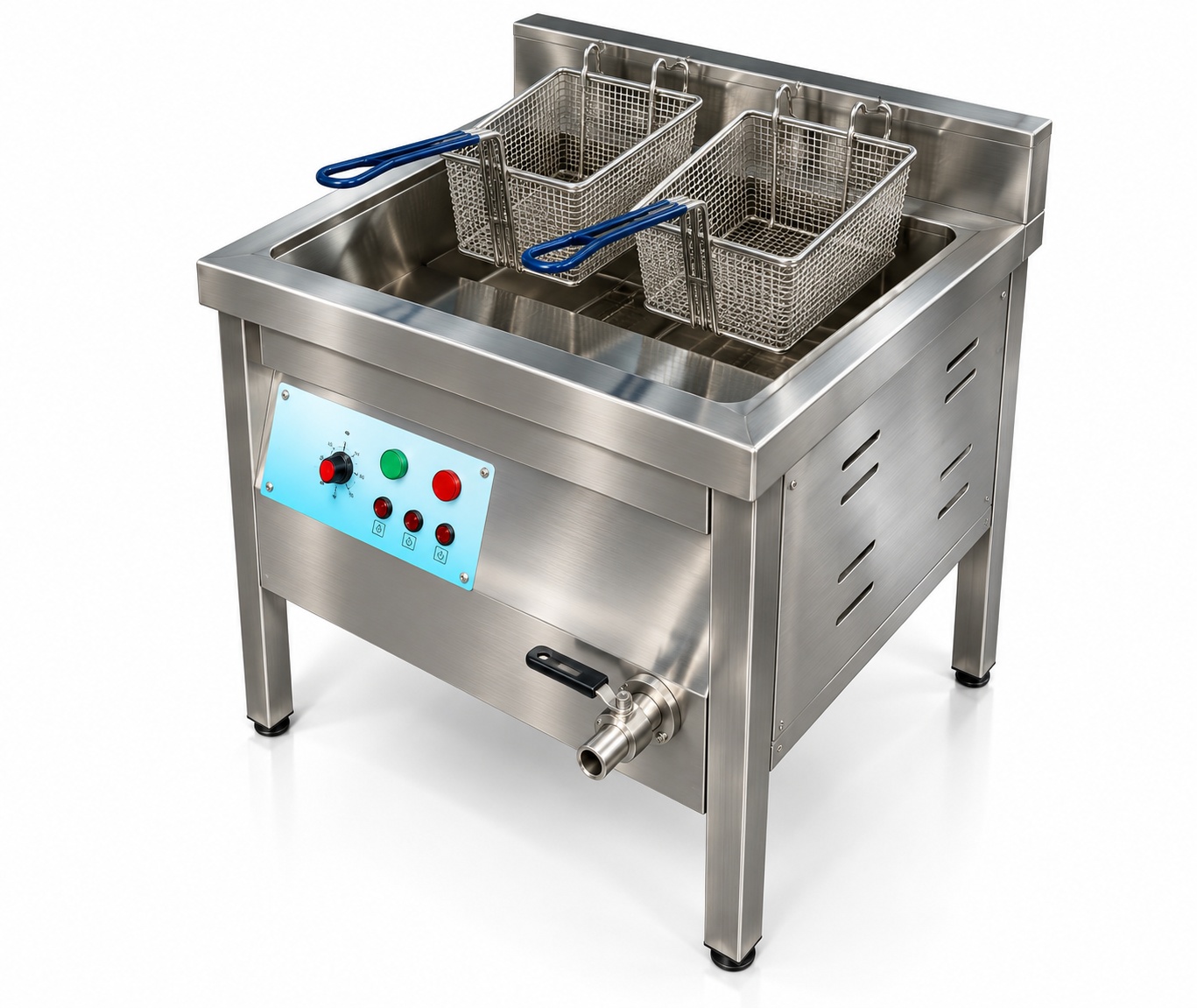
A wide, shallow oil pan that holds the entire surface at frying temperature for the whole service.
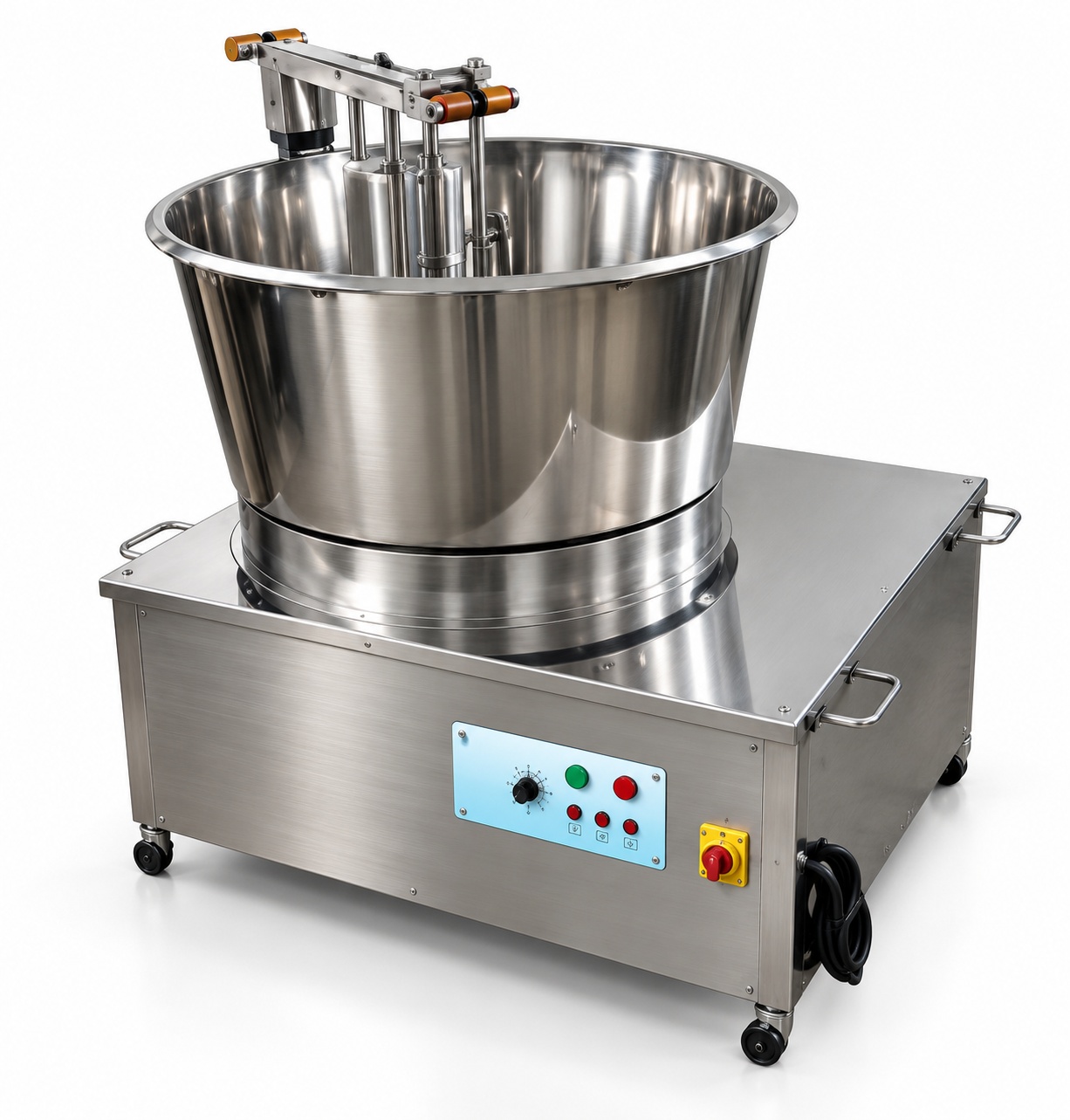
Reduces milk to mawa in one vessel, with both the stirring and the heat under precise control.
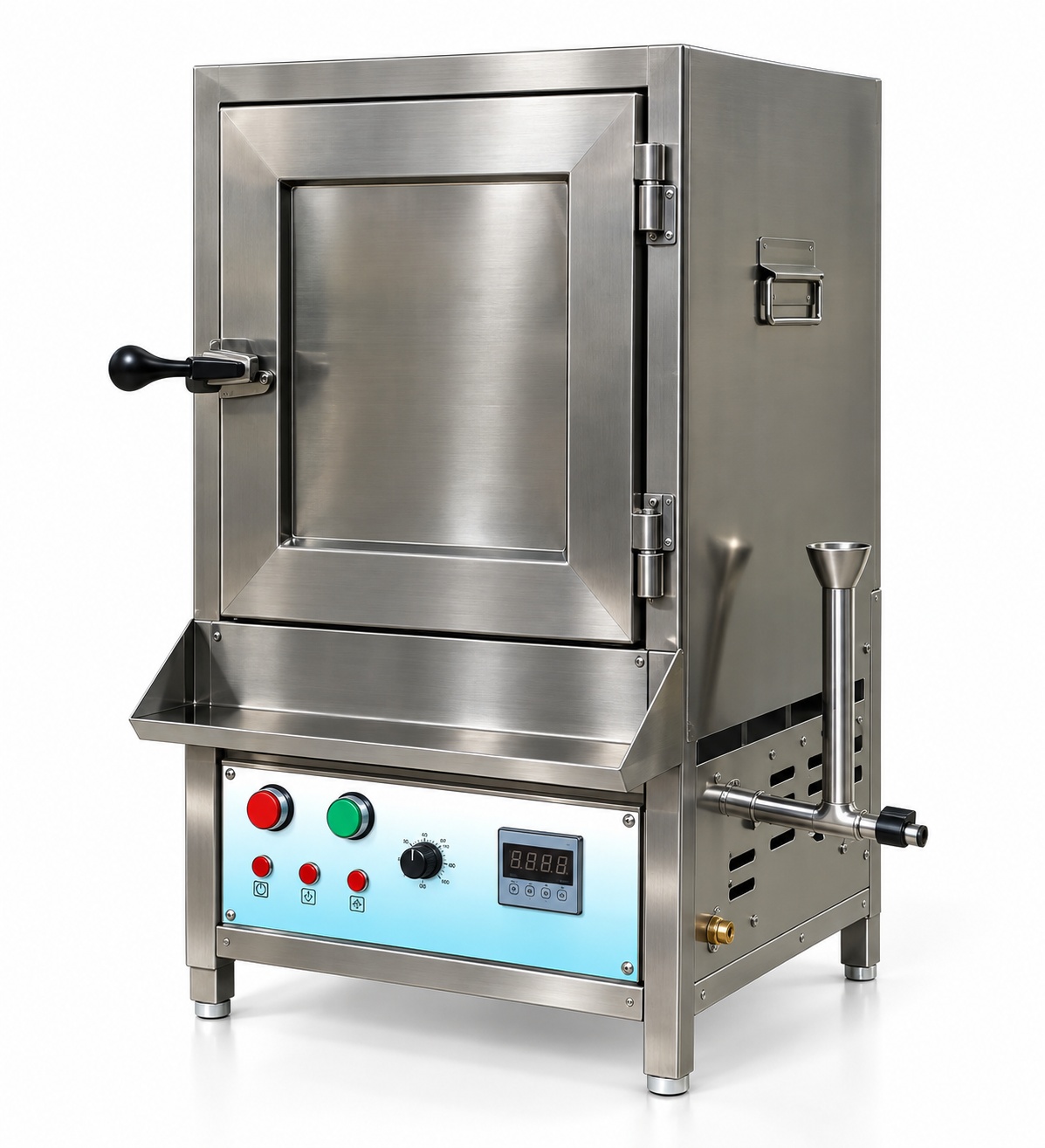
Cooks idlis, momos, dhoklas and vegetables with steam raised inside the unit, without a separate boiler line.
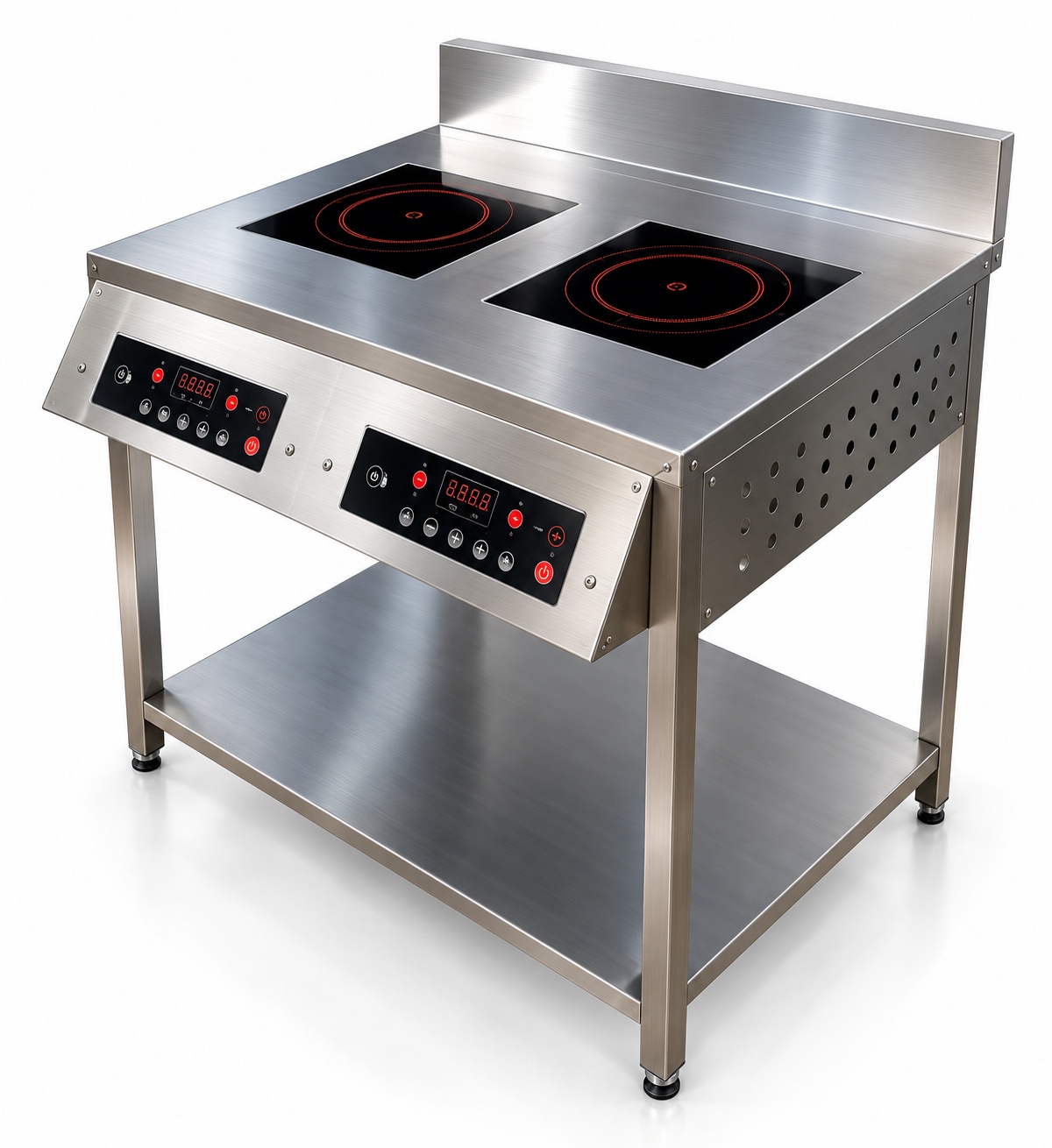
A drop-in unit that sits flush in the counter, for kitchens where the surface is the workspace.
In a conventional gas kitchen, a large share of the energy you pay for never reaches the food. It escapes into the air, the walls and the exhaust system, and your cooling equipment then works harder to remove it. Induction generates heat inside the vessel itself, which means far less of it is lost to the room.


01 / 06
Commercial induction kitchens delivered across India and the Gulf: sweet and farsan makers, restaurant chains, hotel groups, hospitals, airports, railway base kitchens and ships of the Indian Navy.



































It depends on two numbers: your electricity tariff and your fuel price. Induction delivers far more of its energy into the food than a burner does, so it wins on energy consumed. Whether that becomes a lower bill depends on the price of each unit where you are, which is why we model it against your own figures rather than quoting an average.
Only vessels with a flat, magnetic base couple with the field. Copper, aluminium and warped pans will not. We audit your vessel inventory before specifying anything, because the pans you already own change both the equipment list and the cost of switching.
That is checked before any equipment is specified. Sanctioned load, cable sizing and distribution are verified first, and the equipment list is then sized to the capacity you actually have rather than the capacity a catalogue assumes.
It is planned around your service. We record what the kitchen produces, position the equipment around the way your team already works, then issue a drawing your contractor can build from, so the work happens in a sequence you agreed rather than one imposed on you.
Sometimes. For emerging technologies, waiting is often correct and we will say so. For established ones such as induction, waiting mostly means paying the current bill for another year.
Tell us what the kitchen cooks and we will tell you what it needs.